
Advise vs. Advice: Meaning, Difference, and How to Use Each Correctly

Summary
Advise is a verb meaning to give recommendations.
Advice is a noun meaning the recommendations themselves.
Use advise for actions; use advice for things or ideas given.
Introduction
“Advise” and “advice” are among the most frequently confused word pairs in English.
They look similar, sound similar, and relate to the same concept—guidance—but they function differently in sentences.
In this guide, you’ll learn:
● What advise means
● What advice means
● How to tell them apart instantly
● How to use each word correctly
● Common mistakes
● Real-world examples
● A quick quiz to test your understanding
What Does “Advise” Mean?
Advise is a verb.
✔ Meaning
To recommend, suggest, or give guidance.
✔ Pronunciation
/əd-vaɪz/ → ends with a z sound.
✔ Examples
Sentence | Meaning |
|---|---|
I advise you to start early. | I recommend it. |
The doctor advised him to rest. | She gave medical guidance. |
Can you advise me on this issue? | Can you give suggestions? |
What Does “Advice” Mean?
Advice is a noun.
✔ Meaning
Guidance, suggestions, or recommendations given to someone.
✔ Pronunciation
/əd-vaɪs/ → ends with an s sound.
✔ Examples
Sentence | Meaning |
|---|---|
Thank you for your advice. | Your recommendations. |
That was helpful advice. | Helpful guidance. |
She gave me excellent advice. | She offered strong suggestions. |
Advise vs. Advice(Side-by-Side Comparison)
Feature | Advise | Advice |
|---|---|---|
Part of speech | Verb | Noun |
Meaning | To recommend / suggest | The recommendation itself |
Example | I advise caution. | Your advice was helpful. |
Pronunciation | Ends with a z sound | Ends with an s sound |
Memory tip | Advise = “I advise you” (action) | Advice = “Nice advice” (thing) |
How to Remember the Difference
✔ Trick #1: One is an action, one is a thing
● Advise → action (verb)
● Advice → thing (noun)
✔ Trick #2: Listen to the sound
● Advise → ends with /z/
● Advice → ends with /s/
✔ Trick #3: Swap the word
Try replacing it with “recommendation” or “suggest.”
● If “suggest” fits → use advise
● If “recommendation” fits → use advice
Common Mistakes (and How to Fix Them)
❌ Mistake 1: Using “advise” when you need a noun
● ❌ Thank you for the advise.
● ✔ Thank you for the advice.
❌ Mistake 2: Using “advice” when you need a verb
● ❌ Can you advice me?
● ✔ Can you advise me?
❌ Mistake 3: Forgetting the pronunciation difference
Remember:
● Advise = /vaɪz/ → like “wise”
● Advice = /vaɪs/ → like “ice”
More Real-World Examples
✔ Advise (verb)
● We strongly advise against smoking.
● The consultant advised them to reduce costs.
● Teachers often advise students to plan ahead.
✔ Advice (noun)
● His advice changed my perspective.
● I need some advice on career choices.
● Good advice can save time and stress.
Mini Quiz
Fill in the correct word.
1. My lawyer will ____ me on the contract.
2. Thank you for your helpful ____.
3. Doctors usually ____ patients to drink more water.
4. I received excellent ____ from my mentor.
Answers:
1) advise
2) advice
3) advise
4) advice
FAQ
1. Is “advise” always a verb?
Yes. It always means “to recommend” or “to give guidance.”
2. Is “advice” countable?
Generally no. We say “some advice,” not “an advice.”
However, “pieces of advice” is acceptable.
3. Why are they confused so often?
Because they look almost identical and their meanings are closely related.
4. How do I know which one to use?
Check the grammar of the sentence:
● If it needs an action → advise
● If it needs a thing → advice
Conclusion
To use these words correctly, remember the core rule:
● Advise = verb (action)
● Advice = noun (recommendation)
With these definitions, examples, and memory tricks, you’ll avoid one of the most common errors in English writing.

Related Articles

How Do You Conjugate Verbs in Different Moods? A Complete Guide
Learn how verb conjugation works in different moods—including the indicative, imperative, and subjun...
 Amelia Brooks
What is the subjunctive mood, and how do verbs work in it?
Learn how verbs work in the subjunctive mood—a key grammar structure used for unreal, hypothetical, ...
Amelia Brooks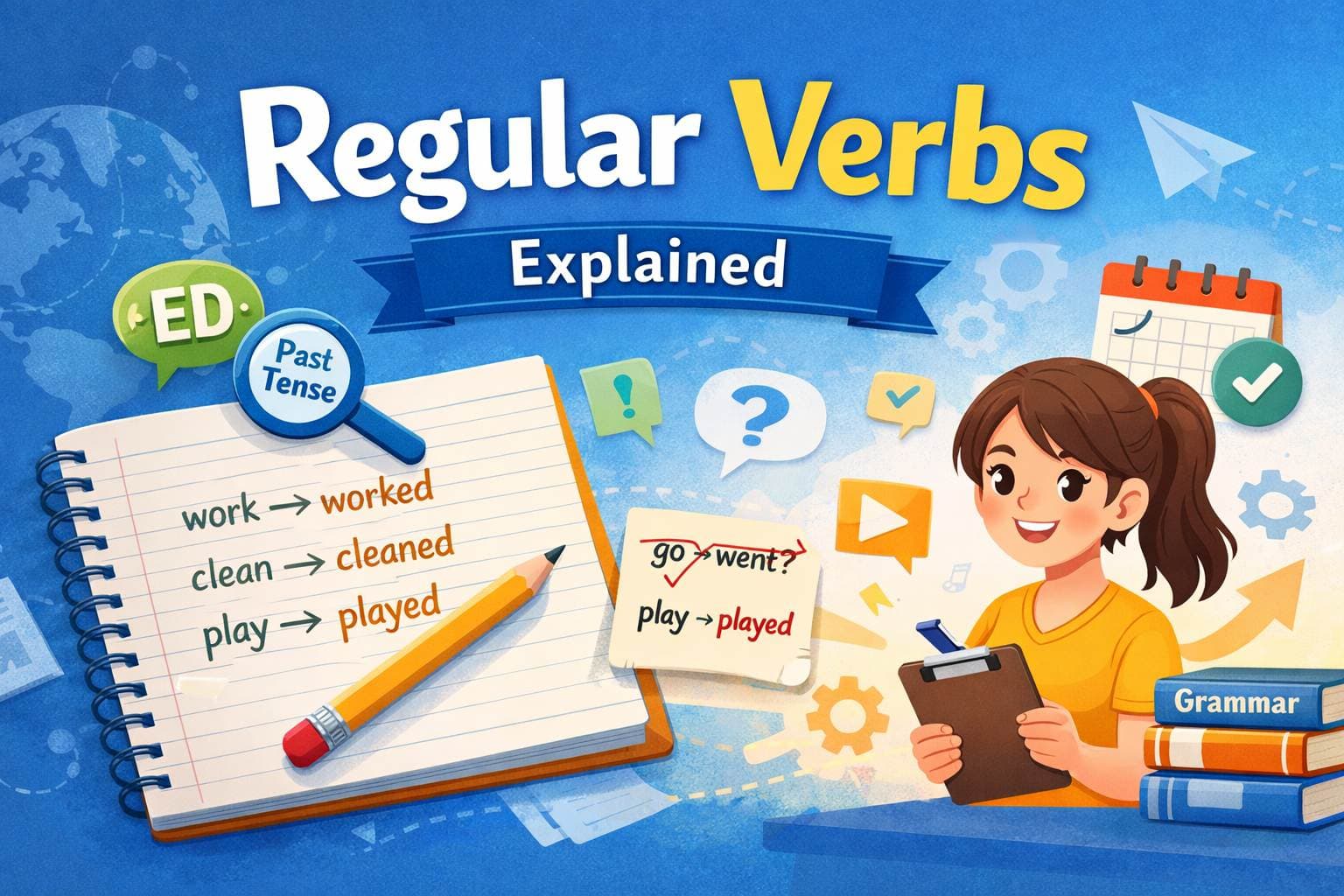
What Are Regular Verbs? Definition, Rules, and Clear Examples
Regular verbs are verbs that follow a predictable pattern when forming the past tense and past parti...
Amelia Brooks